Saturday, January 31, 2009

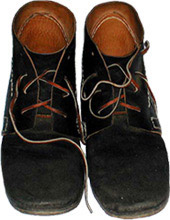
Those Darn Shoes...


I am continually amazed how some myths throughout history keep resurfacing. No matter how many times they are disproved or doubted, they remain in our historical consciousness. George Washington chopping down a cherry tree is one such prominent tall tale. As you can guess, the Battle of Gettysburg has an infinite amount of its own myths and misconceptions. Just recently, I came across this news article from a newspaper in New Zealand which spreads one of the oldest myths of the battle.

Gettysburg: The American Battle than need not have happened

Friday, 30 January 2009, The Gisborne Herald

In 1863, the apparently invincible Confederate army marched northwards with the intention of inflicting a crushing defeat on the Union Army, the effect of which would hopefully drive Abraham Lincoln from office.

A battalion of Southern soldiers, dissatisfied with the deteriorating condition of their footwear, was informed by a colleague, that there was a boot factory in a near-by town. Approaching the town they encountered a detachment of Union cavalry and a violent skirmish ensued.

The Confederate army led by the unstoppable Robert E. Lee arrived as did the Union army commanded by General George Meade. The town was called Gettysburg.

The engagement lasted three days and ended with the failure of Pickett's Charge. Surrounding fields were strewn with over 50,000 dead or wounded, clad in either blue or grey. The great Confederate general had finally been stopped.

As neither Lee nor Meade originally intended to fight at Gettysburg a hypothetical question could be advanced. Was the decisive battle of the Civil War fought over the right of secession, the abolition of slavery, or just over pairs of boots?

Allan Colbert
Although this was most likely a daily trivia story in this newspaper, it begs the question, "Why has this myth of a shoe supply persisted?" Up until the recent construction of a Nike Shoe "Factory" at a local outlet, there never was such a shoe factory in Gettysburg. So, where did this story come from?

Many historians argue that Confederate Gen. Henry Heth concocted this story as an excuse to hide his own errors leading up to the battle. Heth had been ordered by Lee not to bring on a fight, at least until the army was forced together. Heth did the exact opposite when he moved his entire division towards Gettysburg. Rather than finding shoes, the southerners found Union Gen. John Buford's cavalry awaiting them. Henry Heth argued that he was only seeking shoes for his footsore boys and he didn't mean to start this fight. If this were true, why did he take an entire division just to confiscate some shoes?

For as much as I admire Heth and his colorful military record, I have a hard time believing his story. First of all, Confederate forces under John Gordon had already marched through Gettysburg on June 26, several days before the battle, and found no shoes. Although there were a dozen or so cobblers and cordwainers in town at that time, these businesses hardly would have had enough shoes to supply thousands of men. In fact, Gordon's men held the town for ransom, which included a demand for 1,500 shoes. They didn't find any. Further southern intelligence suggested that there was no evidence of shoes in the area. For as much as many needed footwear, they weren't going to find any in Gettysburg. In Mechanicsburg however, one shoe salesman had his entire stock raided and was left with nothing more than $4,000 in useless Confederate currency.

As the old saying goes, those who yell the loudest are heard the clearest. Perhaps Heth simply defended his actions better than his contemporary critics did in denouncing them. Regardless of this, the Gettysburg shoe myth has had historians rolling their eyes for a century or more. Maybe this story keeps coming up simply because it is an entertaining tale. "The greatest battle in the Western Hemisphere began over a pile of shoes." Now that sounds intriguing! Clearly, famed people such as Ken Burns thought so since he included this in his masterpiece The Civil War. I suppose that is when this myth really skyrocketed into American consciousness. I suppose, in the end, maybe this story has done more good than harm. After all, such human interest stories (whether true or not) are what draw people to Gettysburg time and time again. Those darn shoes...

Thursday, January 29, 2009

Gettysburg Address in Guinness Book?

SPRINGFIELD -- One of the most recognizable speeches Abraham Lincoln ever gave could make the Guinness Book of World Records for number of people simultaneously reading from the same document.

On the 200th anniversary of the 16th president’s birthday, the Abraham Lincoln Presidential Museum in Springfield is attempting to get more than 223,363 people to read “The Gettysburg Address” in unison. The reading will occur Feb. 12 at 9:30 a.m.

The old record was organized by Waldenbooks throughout its stores nationwide, said David Blanchette, spokesman for the Illinois Historic Preservation Agency. The idea of reading “The Gettysburg Address” was already planned, but Blanchette said he wanted to up the ante.

“I decided why don’t we pursue a world record,” he said.

The reading will be done via live Web cast on www.presidentlincoln.org. Forms to participate in the reading can be accessed through the Web site beginning Friday. The information received from the forms will be used to determine if the record is broken.

“We’re hoping anyone that does attempt the record fills out the form and sends them to us,” Blanchette said. “It’s going to be a long process of documenting people who did this.”

President Barack Obama has been invited to attend the bicentennial celebration, but Blanchette said the president would not be able to participate in the reading. Obama has not verified if he will be coming to Springfield.

Well, this isn't something I expected for the Lincoln Bicentennial. Nearly a quarter-million people is a lot of readers! We'll see if they pull it off.

Monday, January 26, 2009

David Wills House Museum

I just recently found this brief overview of the soon-to-be opened David Wills House in Gettysburg. Wills was an attorney during the time of the battle and was largely responsible for the creation of the National Cemetery there. His home was the site of much preparation for the cemetery and its dedication in November 1863. President Lincoln resided there the night before he delivered the Gettysburg Address. It is said he put the finishing touches on the document in the home that night. This overview gives a description of each museum gallery as well as some history concerning the structure and town. The museum will open on Lincoln's 200th birthday.

Sunday, January 25, 2009

Internship News


Well, yesterday I received an envelope with the Department of the Interior emblem on it. I knew right away that it contained information on my upcoming internship. The three page letter included additional details on intern life and expectations, including info on housing, interpretive training, and Gettysburg orientation. I have to be settled into my new home near the visitor center before May 26, for that is the first day of my training. In the meantime, I have much reading to complete. Included in this three page document was a short bibliography of suggested reading to better prepare myself for the experience. These works include:

For the campaign and battle:
Gettysburg by Stephen Sears
Gettysburg: A Testing of Courage by Noah A. Trudeau
The Gettysburg Campaign: A Study of Command by Edwin Coddington

Soldier Experience:
For Cause and Comrades by James M. McPherson
The Life of Billy Yank by Bell Irvin Wiley
The Life of Johnny Reb by Bell Irvin Wiley

Lincoln and the Gettysburg Address:
The Gettysburg Gospel by Gabor Boritt
Lincoln at Gettysburg by Gary Wills
Lincoln by David Donald

The Aftermath:
A Strange and Blighted Land by Greg Coco

Gettysburg in the context of the war:
Battle Cry of Freedom by James M. McPherson

Now, I know what you are thinking. "That is a lot of reading in a short amount of time, especially in addition to college reading." Well, luckily for me, I've read over half of these books already and own some as well. Hopefully the other interns have read many of these as well. (I don't know who they are or where they are from yet, but look forward to finding out!)

The remainder of the packet included some common questions asked by interns, including ones concerning housing, uniforms, days off, supervisors, etc. (It didn't say if we get to wear ranger hats or not.) Do you the park has a welcome picnic lunch for us interns on our first day? How cool! This letter told me much but there are more packets with further detail arriving in the coming weeks. More to come soon!

Friday, January 23, 2009

Some Lincoln Art


Just this week, some of my artwork was placed on the Lincoln Bicentennial website. I first spoke with the folks at the Library of Congress about this while helping to plan a Lincoln exhibition at my local historical society. We shared a few ideas and culminated them into an online coloring book for students. These illustrations depict a number of scenes and places throughout Lincoln's life, including the Lincoln Cabin and the Gettysburg Address. They are available for download or printing by teachers and students. Please check them out and feel free to use them in any way you like. I'm just glad I have the opportunity to participate in this national commemoration. Hopefully, some young people will have fun with these pictures and learn a thing or two from them.

Thursday, January 22, 2009

The Historic David Wills House

One of the newest historical attractions opening in Gettysburg is the David Wills House. This structure is where Lincoln put the finishing touches on the Gettysburg Address. The building is nearly completed with a multi-year restoration to be completed for the Lincoln Bicentennial. Barb Sanders (my future summer boss) has played a large role in preparing the new museum. The new facility will open in three weeks.


Wills House to Open Feb. 12

http://blog.pennlive.com/midstate_impact/2009/01/large_wills.jpg

Three weeks before its planned opening, there's not much to see at the David Wills House.

Saw dust, ladders, garbage cans and a cardboard sign that reads "Clean dry feet only" are the current occupants of the soon-to-be Gettysburg museum.

But officials say the historic structure - where Abraham Lincoln put the finishing touches on his famous Gettysburg Address - will be ready for its Feb. 12 opening. The date coincides with President Lincoln's 200th birthday.

The walls are painted, but little else looks as it will when visitors get their first look at the museum. In the coming weeks, furniture, display exhibits and artifacts will take the place of construction equipment.

"A museum always looks like this just before it opens." The park owns the Wills House and has been behind the building's restoration, but the museum will be operated by Main Street Gettysburg. On Thursday, officials gave local media a sneak peak of the Wills House.

The museum had originally been scheduled to open Nov. 18, 2008 - 145 years after Lincoln delivered the Gettysburg Address during the dedication of the Soldiers' National Cemetery. But "major" structural issues delayed the opening. During the $7.2 million restoration project, workers found that the home's basement walls were crumbling and needed to be rebuilt. Concrete piers were also put in place to support the structure, Lawhon said.

The David Wills House, located on Lincoln Square, is more than just a place Lincoln slept. It was essentially the headquarters of Gettysburg's clean-up and recovery process after the Battle of Gettysburg. David Wills, a prominent town citizen, coordinated the efforts from inside the house.

He was both the Red Cross and the Federal Emergency Management Agency, said park ranger and education specialist Barb Sanders.

"All those things they didn't have back then fell on David Wills," she said.

That story will be told primarily on the museum's first floor. The first gallery is the parlor room, where artifacts and photographs will describe the battle's aftermath and Wills' role in the recovery efforts.

"I think people will come here wanting to get the Lincoln story," she said. "And I think they'll leave thinking, 'Wow, that Wills story is really something.'" Sanders said. Also on the first floor is the first of two recreated rooms. Visitors will see Wills' law office as it appeared in 1863, when he was busy answering letters from locals, governors and family members of those who died at Gettysburg.

On the second floor, the Lincoln bedroom has also restored to its 1863 appearance. The bed where Lincoln slept and other original furnishings will be on display.

Other exhibits will explain the legacy of the Gettysburg Address and the evolution of the Wills House - which is also a former hardware store, drug store, music store and antiques market.

The museum will open at 10 a.m. on Feb. 12 and will be free the whole day. Admission charges will begin the following day. Fees are $6.50 for adults, $5.50 for senior citizens, $4 for children 6 to 12 and free for children under 5.

Tuesday, January 20, 2009

A New Birth of Freedom in America

What an astounding day for the nation. I spent the afternoon with my aunt and her family. She was active in the Peace Corps during the height of the Civil Rights Movement and helped many African-Americans register to vote for the first time in their lives. Needless to say, this day meant a lot for her. As President Obama mentioned our nation's many struggles, including Gettysburg, I came to realize that my aunt's mission (as well as Lincoln's) were coming to fruition this day. In what other democracy or country could such a thing happen? We indeed are a nation of immigrants, and that fact is being celebrated this day.

Below is a great editorial by Pulitzer-Prize winning Civil War Historian James McPherson, further explaining how past meets present. Happy Inauguration Day America.


Removing the Stain

Lincoln promised a 'new birth of freedom.' With his hand on Lincoln's Bible, Obama fulfills that pledge.

James M. McPherson
NEWSWEEK
From the magazine issue dated Jan 21, 2009

In November 1863 president Abraham Lincoln delivered a brief address at the dedication of the soldiers' cemetery in Gettysburg. The Union dead buried there had given the "last full measure of devotion" in the bloodiest battle of a "great civil war" that would determine whether the nation founded four score and seven years earlier would "long endure" or "perish from the earth." Lincoln urged the audience—which has included millions of Americans who have read these words since 1863—to "highly resolve" that the United States "shall have a new birth of freedom." Barack Obama chose a new birth of freedom as the theme for his Inaugural Address. He took the oath of office with his hand on the same Bible Lincoln used for that purpose in 1861.

Lincoln did not define "a new birth of freedom" at Gettysburg, but his contemporaries knew what he meant. The nation had been founded on a charter of freedom which declared that "all men are created equal" and "endowed by their Creator" with the unalienable right of liberty. Yet the man who wrote these words owned many slaves. African-Americans were enslaved in all 13 states that proclaimed their freedom from British rule in 1776. "How is it that we hear the loudest yelps for liberty among the drivers of negroes?" asked the English littérateur Samuel Johnson in 1775. It was a question that embarrassed the Founding Fathers and continued to plague Americans who liked to boast of their republic as a "beacon of liberty" to the oppressed peoples of other lands. Slavery soon disappeared from the states north of the Mason-Dixon line and was prohibited north of the Ohio River by the Northwest Ordinance. But the institution grew stronger than ever in the states south of these boundaries. By the mid-19th century the United States was the largest slaveholding country in the world. "The monstrous injustice of slavery," said Lincoln in 1854, "deprives our republican example of its just influence in the world—enables the enemies of free institutions, with plausibility, to taunt us as hypocrites."

A growing number of Americans agreed with Lincoln. They decried not only the institution of bondage but also the "slave power" that had dominated the national government since 1789. During two thirds of those years a slaveholder had been president of the United States. Two thirds of the Speakers of the House and presidents pro tem of the Senate, as well as 20 of the 35 justices of the Supreme Court, had been from slave states. The slave power's lock on the federal government was broken by Lincoln's election in 1860 with no electoral votes from any of the 15 slave states. He won on a platform pledging restriction of the future expansion of slavery. Such restriction, Lincoln had said in his "House Divided" speech two years earlier, would place slavery "in the course of ultimate extinction." With Lincoln's victory in 1860, declared Charles Francis Adams (the son and grandson of two previous Northern presidents), "the great revolution has actually taken place ... The country has once and for all thrown off the domination of the Slaveholders."

Precisely. The slaveholders thought the same. That is why they launched a counterrevolution of Confederate independence to protect slavery from the new antislavery majority that had elected Lincoln. This pro-slavery counterrevolution ironically sealed the fate of bondage. When Confederate guns opened fire on Fort Sumter six weeks after Lincoln's inauguration, they set in motion a war that ended four years later with the extinction of slavery as well as of the Confederacy. The Civil War did not begin as a war to abolish slavery. Quite the contrary, the North's initial war aim was to "restore the Union"—a Union in which nearly half of the states were slave states. As late as August 1862—16 months into the war—Lincoln declared that "my paramount object in this struggle is to save the Union, and is not either to save or destroy slavery. If I could save the Union without freeing any slave I would do it, and if I could save it by freeing all the slaves I would do it; and if I could save it by freeing some and leaving others alone I would also do that." Often misinterpreted, Lincoln's purpose in this declaration was to prepare public opinion for the proclamation of emancipation he had already decided to issue at the right time. He had concluded that to win a war against an enemy fighting for and sustained by slavery, the North must strike against slavery. "Without slavery the rebellion could never have existed," said Lincoln in 1862. "Without slavery it could not continue ... We [want] the army to strike more vigorous blows. The administration must set an example and strike at the heart of the rebellion."

As commander in chief, Lincoln had the authority to seize enemy property being used to wage war against the United States. Slaves were such property, for their labor sustained the Confederate economy and the logistics of Confederate armies. On Jan. 1, 1863, Lincoln invoked this authority to proclaim freedom for slaves in states and parts of states at war with the United States. To make good on this proclamation, of course, the North would have to win the war. To help Union armies do so, Lincoln included in the Emancipation Proclamation a provision for recruiting freed slaves into the armed forces. During the next two years some 200,000 black soldiers and sailors—most of them former slaves—fought for the Union and freedom. By August 1863 these fighting men had so far proved their value that Lincoln publicly praised them and contrasted them with Copperhead Democrats who opposed the war. When the conflict was won, said Lincoln, "there will be some black men who can remember that, with silent tongue, and clenched teeth, and steady eye, and well-poised bayonet, they have helped mankind on to this great consummation; while, I fear, there will be some white ones, unable to forget that, with malignant heart, and deceitful speech, they have strove to hinder it." A year later, with more than 100,000 black men under arms, Lincoln proclaimed their contribution essential to victory. Without these soldiers, he said, "we can not much longer maintain the contest ... Abandon all the posts now possessed by black men ... & we would be compelled to abandon the war." The fighting of black troops helped to bring the new birth of freedom consummated by Union victory in 1865. It also persuaded Lincoln to take the first step toward equal civil and political rights for freed slaves.

In March 1864 he wrote the new governor of the reconstructed part of Louisiana to urge that literate African-Americans and black soldiers be enfranchised. "They would probably help, in some trying time to come, to keep the jewel of liberty within the family of freedom." Thirteen months later, on April 11, 1865, Lincoln spoke to a crowd on the White House lawn that had come to celebrate the surrender of Robert E. Lee's army at Appomattox. It was time to look to the future, said the president, a future in which the ex-Confederate states would return to the Union on the basis of this enfranchisement of many African-Americans. One of the listeners in the crowd turned to his companion. "That means n––––r citizenship," snarled John Wilkes Booth. "Now, by God, I'll put him through. That is the last speech he will ever make." Three days later Booth carried out his ugly threat. The nation was deprived of Lincoln's leadership during the trying years of Reconstruction.

The 14th and 15th Amendments to the Constitution granted equal civil and political rights to AfricanAmericans—on paper. For a few years these pledges were fitfully fulfilled on the ground as well. But the nation backslid from this commitment in the 1870s. The freed slaves and their descendants fell into the mire of segregation, repression and exploitation. The Pledge of Allegiance to the flag, written in 1892 to celebrate the triumph of American nationalism in the Civil War, spoke of one nation, indivisible, with liberty and justice for all. An indivisible nation and liberty were realities in the 1890s. But justice for all was not. The new birth of freedom was incomplete. Three generations later the civil-rights movement put America on course again toward that new birth—toward justice for all. The election of Barack Obama gives hope for completion of the course. When he took the presidential oath with his hand on the Lincoln Bible, the nation had come a long way toward fulfilling the promise made at Gettysburg a century and a half ago.

McPherson is the author of "Abraham Lincoln," "Tried by War: Abraham Lincoln as Commander in Chief" and "Battle Cry of Freedom," which won the 1989 Pulitzer Prize.


Monday, January 19, 2009

Historic Time for America

On the eve of one of the most historic inauguration's of our time, many people throughout our nation and world are looking to the past to prepare for the future. The words and actions of President Elect Barack Obama are being compared to those of Lincoln. Many comparisons can be drawn to the 16th and 44th presidents. Even the theme of Obama's inauguration is "A New Birth of Freedom," one of the many prominent messages in the Gettysburg Address. The following article from Milwaukee's Journal Sentinel greatly explains how the past is still a relevant part of our national being.

Lincoln's "New Birth of Freedom" still resonates

http://media.jsonline.com/images/JOURNEY-19-1-reviseofx-wood.jpgGlen Cahill and Laura Wills from Red Bank, N.J., brave the cold winter air to view Cemetery Hill, where Union forces repelled a Confederate assault during the Battle of Gettysburg.

Gettysburg, Pa. - Everyone comes here in search of their own private Gettysburg, where armies fought, where Lincoln spoke, where the Union was preserved.

It's winter now, on the once-blood-soaked fields and rocky ridge lines of America's sacred place.

The crowds are thinned, the wind is chilled and a light snow falls on graves and monuments, muffling sounds, dusting history.

You scamper up Little Round Top and look across a "valley of death," where the Union and Confederacy collided over three treacherous and violent days in July 1863.

You drive past memorials cut in stone, remembrances of long-ago military units, soldiers who rallied to causes that tore the country apart.

You scan goods in a gift shop, Robert E. Lee throw rugs and Gettysburg pillows, books and DVDs, key chains, shot glasses, T-shirts, snow globes and golf balls, all adorned with symbols and words that evoke a battle.

But inevitably, you find your way to the National Cemetery, to graves arrayed in a semicircle and to a spot, 50 paces or so from the soaring Soldier's National Monument.

This is where Abraham Lincoln ventured on Nov. 19, 1863, stood on a temporary wooden speaker's platform and gave his Gettysburg Address in front of thousands of people, in a town that knew war all too intimately.

He spoke for two minutes. The words have survived generations, right to the present day and "a new birth of freedom."

Lincoln's phrase remains gloriously alive, the theme for the inaugural of Barack Obama, the nation's 44th president.

"'A new birth of freedom' has probably been quoted more nowthan in any single time in history," said John A. Latschar, superintendent of Gettysburg National Military Park.

There is a line in American history that goes from Gettysburg in 1863 to Washington in 2009, to a turning-point battle in America's struggle to end slavery and to the inauguration of the country's first black president.

"Without Gettysburg, the outcome of the Civil War could have been different," Latschar said. "How it ended, how long it lasted. Everything is tied together."

The Gettysburg Address is a poem and a plea, a 272-word summation of America.

Latschar said he is convinced that Lincoln drafted the speech in Washington and revised it in Gettysburg while staying at the home of David Wills, a local attorney who oversaw the creation of the cemetery.

Latschar said Lincoln laid down a challenge to his country.

"He was talking about the equality of all people," Latschar said. "It continues to resonate ever since. When women went for the vote, they cited the new birth of freedom. Franklin D. Roosevelt talked of his four freedoms."

You walk through Gettysburg and you find others on a journey. Some are chaperoned by tour guides immersed in the history of the battle. Others leap from their cars, rush to the ridge lines, snap photos and move on.

Many linger, contemplate three days that echo still.

Glen Cahill, a red-faced 54-year-old trucking company manager from Red Bank, N.J., tours Gettysburg for the 20th time. The battlefield is 10 square miles of history that changes at every turn.

Up on Cemetery Hill, he stands against the wind and talks of a war he never witnessed.

"As horrible as the war was, it shows the extremes of human emotion - bravery, fear, compassion, the struggle for both sides and how far they were willing to go for their cause," he said.

To Cahill, the war still resonates, "shows the strength of the nation, the resolve we have and our ability to be a great nation in the face of adversity."

Bryan Lee and Jenny Holder, a pair of 18-year-olds from Raleigh, N.C., walk through the cemetery, past small marble blocks inscribed with numbers for hundreds of unknown Union dead.

"It's hard to imagine a whole army marching across a field," Lee said.

The teenagers walk on. The country will soon be theirs.

"It's nice to know that change is happening," Holder said. "But we have history, and it's nice to know America is planted in history."


It is great to see current events create excitement for our history. A new generation is becoming aware of people and places such as Lincoln and Gettysburg, not through school, put through our new president. This is an exciting time for America. However, just as stated in the Gettysburg Address, there is much work left to be done for our country. Let us hope that our "increased devotion" will help us overcome our struggles just as we have in the past.

Friday, January 16, 2009

Not the First Time...

The recent defacement of the Eternal Peace Light Memorial at Gettysburg is an event that has outraged the historian community. The restoration effort will most likely take thousands of dollars and hundreds of work hours to complete. Despite the anger over this recent incident, vandalism and theft have been a common occurrence on the battlefield, well...since 1863. The Peace Light has not been spared in the past either. Just today, I was informed of some old photos in the collection of the The Center for Civil War Photography, which shows scenes of other vandalism on the monument. I highly encourage you to visit their website and explore the fantastic collection of Civil War photos.

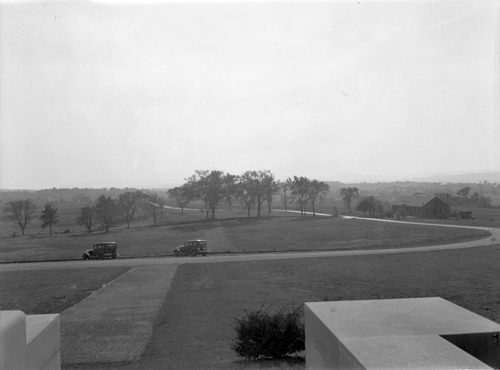
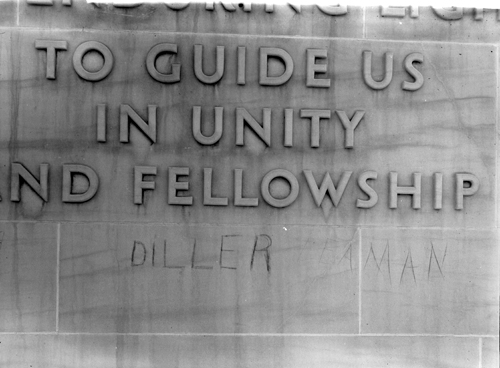
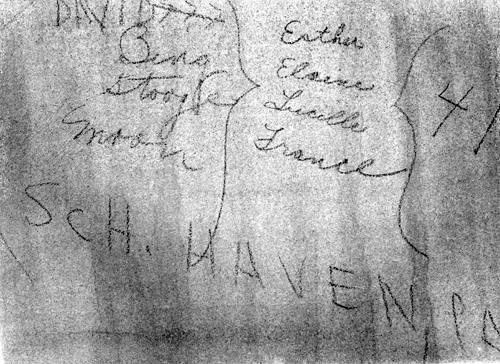
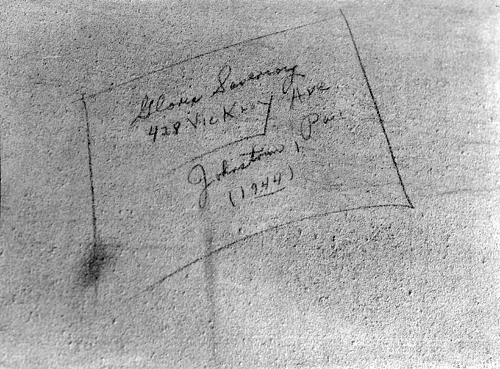
The majority of the following black and white pictures were taken in the 1940s. By examining the photos, you would think that people would have more reverence for such sacred objects, especially during World War II. It just goes to show that there are inconsiderate people in all places and eras of history.

http://farm4.static.flickr.com/3143/3027793499_0a7ae9b45b.jpg?v=0
A view from the Peace Light in 1948. Peaceful, isn't it?

http://farm4.static.flickr.com/3280/3027789755_d73d4168d5.jpg?v=0
However, many tourists wrote their names on the monument...

http://farm4.static.flickr.com/3026/3027789509_84268983ae.jpg?v=0
Now, what would make people treat this monument as if it were a
gas station bathroom wall? Your guess is as good as mine.


http://farm4.static.flickr.com/3237/3027788321_1a736200ed.jpg?v=0
Hmm. Apparently, people were not worried about prosecution. Writing a name is one thing, but your address too? Now, Johnstown, PA is only an hour away from my home. Perhaps I will look up Ms. Gloria Sweeny and ask her what she was thinking!


Wednesday, January 14, 2009

Gettysburg Peace Light Vandalized

Last Thursday, an unknown number of miscreants desecrated one of the most visited monuments on the Gettysburg Battlefield. Obscenities are spray painted on at least five different places on the monument. I and many others are shocked and disgusted by this despicable act. Although unlikely, I sincerely hope these vandals will be apprehended and receive just punishment for their transgressions.

The following article and photos appeared in the Hanover Evening Sun:

Vandalized Peace Light Memorial may be unfixable
By ERIN JAMES
Evening Sun Reporter


Five plywood boards are now plastered on the side of the Eternal Peace Light Memorial in Gettysburg after someone vandalized the monument last week.

The boards block most of the words spray painted in blue and black, though one phrase - "U can't get us" - is still visible.

"There ain't no point in it, nothing to gain by it," said James Hickman, a West Virginia man who stopped by to see the monument Tuesday afternoon.

Gettysburg National Military Park officials say the damage cannot be addressed until temperatures warm up because of the monument's unique material.

"Since the monument is made out of limestone, it's more porous," said park spokeswoman Jo Sanders. "So it's going to be harder to get off."

The cleaning materials would freeze in the cold weather, so the plywood boards will remain until temperatures increase, Sanders said.

It's also likely the park will need to hire an outside contractor to do the work because the park does not own the needed equipment, Sanders said, adding that she does not have a cost estimate.

Overlooking the battlefield of first-day fighting at Gettysburg, the Peace Light was conceived as a symbol of unity between the North and South. It was dedicated by President Franklin D. Roosevelt on July 3, 1938, the 75th anniversary of the Battle of Gettysburg. Veterans from both the Union and Confederate armies attended the service, as did about 250,000 other people.


A symbolic gas flame on the top of the monument burns at all times, and its base bears the words "Peace eternal in a nation united."

But for now, the last few letters of that phrase are blocked by plywood, where vandals spray painted their own words.

The damage, which was found Thursday, is not the worst case of vandalism in the park's history, however.

Vandalism has a history of its own at Gettysburg, said Rick Hohmann, president of the Association of Licensed Battlefield Guides.

"Vandalism has been a problem not just recently but almost since the inception of the park," Hohmann said, adding that records show vandalism at the park as early as the 1880s.

More recently, in 2006, someone vandalized the 4th New York Independent Artillery Battery monument by pulling the bronze artilleryman on the monument from its pedestal and dragging it 160 feet. Its head and the rammer for a cannon were broken off and never found.

Two other monuments were damaged at the same time, and park officials said at the time it was the worst act of vandalism in memory.

Graffiti is also not new to the Peace Light memorial, which park officials spent $2,500 to repair years ago after so many visitors had written their names on it.

Sanders said law enforcement is working to catch the latest vandals, but there are no leads.

Hohmann said he'd like to see a more concerted effort to investigate acts of vandalism at the park.

"I think it bothers people," he said. "By the same token, we understand that stupidity does exist."


Disturbing, isn't it? This memorial is located on the summit of Oak Hill and surrounded by guns that mark Confederate artillery positions, the Eternal Light Peace Memorial overlooks the July 1 battlefield. The dark colored stone base was constructed of Maine granite and the lighter colored shaft of Alabama Rockwood Limestone. This design feature represented the North and South reuniting as one country.

The dedication of the memorial by President Franklin D. Roosevelt was the highlight of four days of activities commemorating the 75th Anniversary of the battle and hosted by the Commonwealth of Pennsylvania. More than 1,800 aged Civil War veterans (most in their 90s) attended this last great reunion of the Battle of Gettysburg. I hope these vandals are proud of their work...

Dedication of the Eternal Light Peace Memorial

A Scene from the Unveiling of the Peace Light in 1938. (GNMP)


Monday, January 12, 2009

It's Official: I'm in!

Just as I was preparing to leave home for my first day returning to college, the phone rang. I thought it was going to be my mother, for she often calls me from work many mornings to wish me well at school. Instead, another lady replied to my "hello." It was Barb Sanders, education coordinator at Gettysburg National Military Park. This was it! The culmination of hours of work and months of anxious waiting was at hand.

Back in June (five months before the deadline), I applied for an internship at the park. I wrote a heartfelt cover letter, poured over a five page resume, included seven references, an eight page bibliography, and even some sample artwork. I really wanted this internship.

Now, seven months later, I was about to learn whether or not it was all for nothing. After a brief moment of greetings, I heard the words I had long been waiting for: "...we'd love you to come spend the summer with us." I did it! Obviously, I was and still am elated. When I told one of my history professors today that I got the position, he jumped out of his office chair and gave me a pat on the back. Needless to say, my family and friends are as equally enthused.

This internship means a lot to me. Not only do I read or watch anything Gettysburg related I can get my hands on, but the place holds a much higher meaning to myself and millions of others. I had at least three ancestors who fought there in Union regiments, including the 53rd PVI and the 116th PA. Ever since I first visited the place at age seven, I knew I wanted to enter the History profession. Barb Sanders told me it looked like I had been preparing for this opportunity my whole life. In many way, I have.

Through this blog, I plan to chronicle my experiences at Gettysburg this summer as well as my steps in preparing for my internship. Along the way, I hope to share numerous historical anecdotes, news articles, and modern events regarding Gettysburg and the American Civil War. I hope you will enjoy reading it as much as I do sharing it.

My posts may be few over the coming weeks since I'm just starting a new semester and my actual internship is still sometime away. Nevertheless, I'll keep you up to date now and again. Until then, cheers.