Here is another bit of Civil War movie news. The first set of photos from Robert Redford's anticipated film The Conspirator have been released. The film, which depicts the aftermath and trials of the Lincoln assassination, is set for release this fall for Oscar Season. Above, actor Toby Kebbell plays John Wilkes Booth, though the movie is more about those who may have aided the character. The murder of Lincoln is shown mainly through quick, impressionistic images. "I see the whole beginning of the film as a vortex of images and the key facts you need to know," Redford says. Photos courtesy of USA Today.
Robert Redford directs the execution scene in his new movie The Conspirator. He says he wouldn't have made the movie "if it had just been about Lincoln. (Documentarian) Ken Burns did a great job with the Civil War, and so many stories and films have been shown about the assassination," Redford says. "What we don't know is the story I wanted to tell." This was filmed at Fort Pulaski in Savannah, Georgia.
Redford directs James McAvoy as attorney Frederick Aiken, a Union soldier reluctantly representing a Southern woman accused of plotting to assassinate Abraham Lincoln. For history buffs, the movie dives into the country's efforts to find justice after one of the most devastating incidents in American history.
James McAvoy's soldier-turned-lawyer in this conspiracy case finds himself in the uncomfortable position of defying the Union after nearly dying for it. "He barely survived the war. He was very heroic and won medals for bravery in the field, and comes back and wants to go back into law, and right away he's pulled into this case because no one else will defend this woman," Redford says.
Alexis Bledel co-stars in The Conspirator as the fiancee of attorney Frederick Aiken. She resents his efforts to give a good-faith defense of a Confederate sympathizer, threatening the stability of their relationship.
Robin Wright plays Mary Surratt opposite McAvoy as her reluctant attorney. Her boarding house was where some of the assassination plot was planned, and she was the lone woman prosecuted in the case, facing the gallows. In the film, her attorney believes the trial is just an effort to bring her fugitive son out of hiding. This film has much potential and I personally am looking forward to seeing it.
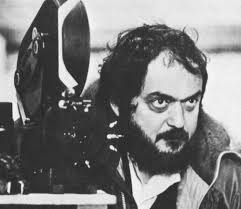
To the deep interest of my dual movie and Civil War geekiness, I was surprisingly pleased to discover that a long lost Stanley Kubrick proposed film, written in part by novelist Shelby Foote, is in the resurrection stage in Hollywood. The film, entitled The Down Slope, is said to be a grand epic of the adventurous and often colorful escapades of Confederate leader John Singleton Mosby and his Partisan Rangers. Like Kubrick's Paths of Glory, the film is said to have a strong anti-war sentiment. How that message will be interjected into the sometimes humorous misadventures of Mosby's Rangers, I do not know. Fellow Civil War blogger Dimitri Rotov has written on this film as well. I recently discovered this excerpt from Collider film website:
The late Oscar-winning director Stanley Kubrick held high esteem for years while he was still alive, and now that he has since passed, Hollywood isn’t ready to let his genius slip away. Philco Films is prepping three properties based on scripts by Kubrick, according to Screen Daily, and they seem to reflect the late film-maker’s varied career. The first will be a large-scale Civil War film entitled Downslope. The second, Lunatic At Large, will star Scarlett Johansson and Sam Rockwell, and the third is a TV series called God Fearing Man that revolves around a famous bank robber in the early 20th century.
Philco Films isn’t aiming low with any of these properties either, as they are targeting A-list casts and crew to bring these three pieces to life. For a more detailed look at each project and the plans behind them, hit the jump.
The staple of the three upcoming properties is the Civil War drama, Downslope. Philco will give the film a $100 million budget to work with and are building from the ground up. The script, which Kubrick based on a short story by historian Shelby Foote, follows John Singleton Mosby’s famous Confederate cavalry known as Mosby’s Rangers, and will reportedly involves spies and toe the line between both sides of the war.
“We are approaching A-list directors for the project because it is an A-list script,” says Steven Lanning, co-founder of Philco Films, while speaking with Screen Daily. While they are shooting for an A-list cast as well, he understands that they “need the director first.”
Although America would seem to be the obvious spot for shooting, the plan is to shoot next year in Europe instead. Part of the reasoning is that the historic battlegrounds in which the period piece will focus on look vastly different today, but also because they are receiving heavy interest from European financiers....
To not film such a movie in the unique and recognizable countryside of the Shenandoah Valley would be a crime in my opinion. But then again, as seen in Cold Mountain, Europeans are shorter and thinner. Meanwhile, America's reenactor community grows old and rotund. Either way, the film has the potential to be the next Barry Lyndon, a sweeping historical epic rich in characters and scenery; or Pearl Harbor (an utter disastrous interjection of romance into historical fact). Only time and production will tell.
Yet another chapter of the spring break history trip - this one perhaps the most unique. Unlike my geographer/geologist father, I couldn't have told you one geologically interesting fact about the place. So, in most cases, I will allow the photos to speak for themselves. I only wish you could sense the scale of some of the stalagmites and stalactites adorning the cave system.
Although Mammoth Cave has 365 miles of surveyed passageways, experts say there could be another 600 miles of unexplored caverns! Holy crap. With about 130 life forms and miles of waterways, the cave is the most extensive in North America and probably on earth. Evidence of ancient life ranging from 2,000 - 4,000 years ago is evidenced within the cave. The site became one of the first tourist attractions in the nation, beginning in 1816. However, the cave was not established as a National Park until 1926.
Early settlers to the rural Kentucky area discovered a number of uses for the cave. They mined for saltpeter - a main ingredient for gunpowder. A number of these workers were slaves. The cave served this purpose during the War of 1812 and became rather famous as a result. One slave, Stephen Bishop, was leased by his owner and perhaps became the cave's first tour guides. Over the next one hundred years, amateur explorers, guides, adventurers, and tourist visited the cave with little experience, safety, or supervision. On amateur caver named Floyd Collins was trapped in the cave for several days before he finally perished. The publicity from this event ushered the National Park Service into the scene to be the site administrator and guardian to visitors and natural resources alike. (Visitors were once able to rip off stalactites and other features from the cave walls as souvenirs, not realizing these formations take thousands of years to grow.) Below are a few photos from our underground adventure - a very deep subject indeed!
Please visit the park's website to learn more about the site's incredibly rich history and beauty.
To get to the cave, we first had to use the NPS ferry to cross the nearby Green River. Hmm, wonder why they call it that?
This is the "Historic Entrance" of Mammoth Cave, the site where the first visitors entered two centuries ago.
The nearby river system was a hotbed of incoming and outgoing tourists as well as goods to provide for them.
Dr. Steven Andrews on the shores of the Green River.
Before we entered one of the cave's many entrances, Ranger Liz with the NPS offered us some background information.
This was the first picture within the cave I took.
Fellow History student Justin Shope walks ahead of me on the skinny stairway as we make our descent into the abyss.
Just don't look down if you are afraid of heights...
This corridor leads you to one of the main cavern areas known as "Grand Central Station."
I don't remember if this view is looking up or down! It all looks the same in photo form!
Yeah, yeah. What's so special about these? Well, you can't tell in the photograph, but these rocks are the size of automobiles.
The cave ceiling, looking about 15 feet up, I believe was called "The Grand Canyon." This spot is about 200 feet below the surface.
Another ceiling shot.
This formation was like a massive waterfall. For some comparison, the shiny rails at the bottom right are stairs. Yeah, they're that big.
I was looking directly up at the ceiling below this formation. Cool, huh?
I was rather pleased by how some of these shots turned out. As you can guess, it was really dark in most places. Ranger Liz even turned out the lights at one point so we could have a "total darkness" moment. And it was! Mammoth Cave is pretty far out there as far as wilderness goes, but definitely worth a visit for anybody interested in nature, history, or a simple good time.
No, not Illinois...Abe's Birthplace in Hodgenville, KY
Okay, I'm going to admit it: I absolutely love the above photo I took in Hodgenville's town square - one of the many I took over spring break. This batch of photos is comprised of two trips to the Lincoln homestead since the memorial was under renovation on our most recent excursion. Born here on February 12, 1809, Lincoln moved to Indiana with his family in 1816. Little is known about the emancipator's childhood. Lincoln himself noted that his youngest days in Kentucky could be summed up in a sentence taken from Gray's Elegy: "The short and simple annals of the poor."
Lincoln's ancestors came to America from England in 1637 and subsequent generations lived in Massachusetts, New Jersey, Pennsylvania, Virginia, and then Kentucky. The first Abraham Lincoln (the president's grandfather), was killed in a 1786 Indian attack on his farm. Thomas, the president's one-day father, sat at his fallen father's side. The native was about to take young Thomas as a captive, but his uncle Mordecai killed the Indian with a musket at the last moment. Just think how one bullet changed history in this case!
Contrary to one myth, Abraham Lincoln wasn't born an illegitimate child, although his mother may have been. (Mother Nancy Hanks is a direct ancestor of actor Tom Hanks.) Although Lincoln's father was at times a hard man, Thomas instilled in Abe some of his most admirable traits - hard work and perseverance. Nevertheless, the relationship was strained and Abraham did not even attend his father's funeral in 1851. Abe had one sister, Sarah, who died in childbirth at age 21 in 1828. Brother Dennis died within the first week of his life in 1810.
Nancy Hanks Lincoln died on May 5, 1818 from "milk sickness," a type of viral infection obtained through contaminated milk from cows who ate poisonous white snake root. This sudden disease causes fever and eventual coma. Thomas married Sarah Bush Johnston the following year, who cared for young Abraham with equal affection and nurturing.
This grand temple sits on the likely cabin site of Lincoln's Sinking Springs farm. Begun shortly after the 1909 centennial, the monument has 56 steps leading to the top - each representing a year of Lincoln's life.
This is the "traditional" or "symbolic" Lincoln cabin. This is not the cabin in which Lincoln was born. In 1894, entrepreneur A.W. Dennett bought the farm to create a tourist attraction. When nobody came, he disassembled the cabin on site to make a roadshow out of it (as well as Jefferson Davis's supposed birth cabin, some 100 miles away). The two structures were on exhibition at numerous fairs and expos throughout the country. But when Dennett went broke, both cabins were disassembled again, became mixed up, and thrown into storage.
It was not until 1906 that the Lincoln Farm Association retrieved the "sacred" logs and brought them home to the tune of $350,000. However, due to recent wood core samplings from the cabin, it is said the majority of these logs date from the 1830s-1840s - twenty to forty years after Lincoln's birth. Other experts argue that the cabin may be more connected to the life of southern adversary Jefferson Davis that Lincoln! Little bro Mark stands in front of the cabin in our 2008 visit.
This spring is the likely reason the Lincoln's located where they did. It is located at the base of the monument hill. The 300 acres were purchased for $200. The rather cheap price may have been due to the poor, red clay soil largely unsuitable for farming. The original cabin was likely 16x18 feet in diameter with a clay chimney. Thomas Lincoln was most talented in cabinet making and was an incredibly hard worker. Although Abraham himself was a hard worker, one friend called him "lazy" because he would rather be "reading" and "Ciphering." Until age 21, Abraham was forced to give all of his monetary earnings to his father - a practice he long despised.
A view of the memorial from the back of the park's visitor center.
Penn State Altoona student Justin Shope, Dustin Faust, me, and Eric Sral visit the site in March 2010.
In 1811, when Abraham was only two, the family moved ten miles away to property at the more fertile Knob Creek. It was here that Lincoln grew from a toddler into a young man. His first views of slavery may have formed here as well. The nearby road was a highly traveled highway on which slaves were transported from one plantation to another. Furthermore, his teacher, Caleb Hazel, was an abolitionist in the extreme. Although Lincoln showed some political patience for slavery in his first term as president, his true, deep-rooted moral attitude against the abominations of slavery is a trait that must be understood to truly grasp his character and motives throughout life. The family moved to Indiana in 1816. This cabin is a reconstruction.
One of the reasons the Lincolns moved to Indiana was because Thomas Lincoln, a devout Baptist, was strongly opposed to slavery, for both moral and economic purposes. This is a modern view of the Knob Creek property. Walking alongside the small stream, it was very easy to imagine the young Abraham playing in the meadows and woods. The silence and serenity of this spot almost reached a sense of spirituality! A very beautiful area and sunset indeed.
See what I mean? I was able to capture this rather unique "halo shot" of the Lincoln memorial on Hodgenville's town square. The sun was right behind the statue's head. Lucky again...
Click to enlarge and read more about "Hodgen's Mill" and its rich history in relation to the Lincoln Family. There is also additional information on the 1909 Lincoln statue and its creator.
This most recent statue was dedicated on the bicentennial in February 2009. Facing the direct opposite side of the town square, perhaps they will dedicate a third and fourth statue for the respective 300th and 400th anniversaries of Lincoln's birth. The statue in question is extremely idyllic and mythical, fitting in very well with the idolized theme of the Lincoln epoch.
Here is a four minute segment of the film from the visitor center. Narrated by late actor Burgess Meredith, the opening is a bit short on facts and a bit long on bad 70s music, but it will give you a good feel for the scenery of the area nevertheless.
Me, Eric Sral, and Dustin Faust visit downtown Hodgenville, small but charming and quaint. Stay tuned for the next installment of the history trip!
The next installment of the spring break history extravaganza took us to the unexpected stop to the battlefield outside Munforville, Kentucky. Known as "Battle for the Bridge" or the Battle of Green River, was fought from September 14 -17 (the same day as Antietam), 1862. According to the National Park Service:
In the 1862 Confederate offensive into Kentucky, Gen. Braxton Bragg’s army left Chattanooga, Tennessee, in late August. Followed by Maj. Gen. Don Carlos Buell’s Union Army, Bragg approached Munfordville, a station on the Louisville & Nashville Railroad and the location of the railroad bridge crossing Green River, in mid-September. Col. John T. Wilder commanded the Union garrison at Munfordville which consisted of three regiments with extensive fortifications. Wilder refused Brig. Gen. James R. Chalmers’s demand to surrender on the 14th. Union forces repulsed Chalmers’s attacks on the 14th, forcing the Rebels to conduct siege operations on the 15th and 16th. Late on the 16th, realizing that Buell’s forces were near and not wanting to kill or injure innocent civilians, the Confederates communicated still another demand for surrender. Wilder entered enemy lines under a flag of truce, and Confederate Maj. Gen. Simon B. Buckner escorted him to view all the Rebel troops and to convince him of the futility of resisting. Impressed, Wilder surrendered. The formal ceremony occurred the next day on the 17th. With the railroad and the bridge, Munfordville was an important transportation center, and the Confederate control affected the movement of Union supplies and men.
The battlefield has been largely preserved through a local grassroots organization known as the Battle for the Bridge Historic Preserve. I applaud this group for their efforts in saving this best kept secret of the Civil War's Western Theater. Above is a map of the park. We parked our Penn State van at the Woodson House. Click to enlarge the map and subsequent photos.
The Anthony Woodson Farmhouse (above) was rebuilt on the foundation of the Civil War era original due to the amount of damage it sustained. The closeness of the nearby strategic L&N Railroad led to the creation of fortifications in the Woodson's front yard and fields. The house faces the bridge, which is about a half mile away.
Additional information on the Woodson Farm. Click to read.
This marker (also seen at left in the first photo), describes the status of the war in Kentucky when the battle took place. The Battle of Woodsonville took place three days later.
Infamous Confederate raider John Hunt Morgan was also very active in the Munfordville, KY area by harassing Federal forces. The top of the L&N RR bridge can be seen in the very far distance of this photo.
Fort Craig was one of the Union fortifications guarding the L&N bridge. The Mississippians launched a direct assault upon it. The badly outnumbered garrison eventually surrendered on September 17, 1862.
The five-point star-shaped Fort Craig is on private property, but thankfully intact.
A more detailed view of the L&N with Munfordville behind the treeline. The stone buttresses are the originals. The rail line is still an active one.
This is the only visual representation of the battle I could locate. Take note of the bridge in the far left.
I'm not going to pretend I am an expert on this battle, so I will allow the maps and interpretive markers to speak for themselves. The bridge in relation to this sign is upper left direction.
Fort Dunham (or "The Stockade") was located on the high ground across the railroad tracks.
As with many Civil War battles, sequences of it were ill-advised and pell mell.
Unbeknownst to us, the famed Terry's Texas Rangers fought at Mundfordville and was the death site of the unit's commander, Colonel Benjamin F. Terry. This Texas monument was placed only a few years ago and denotes the place of Terry's wounding.
A few synthetic "Yellow Roses of Texas" even rest at the base of the monument. Munfordville, Kentucky - worth a visit for you history buffs out there. More from the History Palooza to come soon...


 Robert Redford directs the execution scene in his new movie The Conspirator. He says he wouldn't have made the movie "if it had just been about Lincoln. (Documentarian) Ken Burns did a great job with the Civil War, and so many stories and films have been shown about the assassination," Redford says. "What we don't know is the story I wanted to tell." This was filmed at Fort Pulaski in Savannah, Georgia.